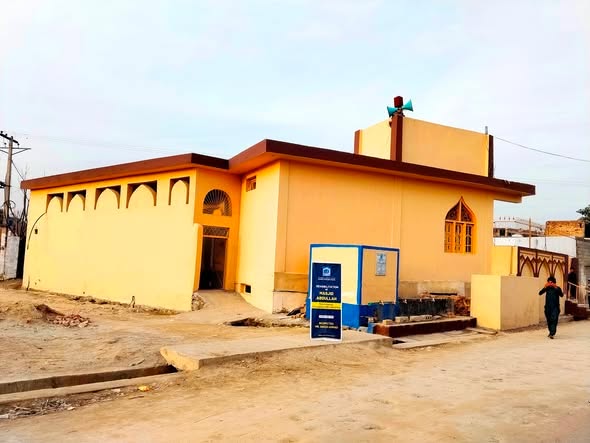

Alhamdulillah, a deeply emotional and monumental milestone has been reached in the ongoing post-flood rehabilitation and community recovery efforts across Khyber Pakhtunkhwa. Following months of tireless construction work, engineering assessments, and dedicated craftsmanship, Alkhidmat Foundation Pakistan has officially completed the full reconstruction and renovation of Masjid Abdullah in Charsadda.
This successful restoration marks a triumphant step forward in helping a resilient community rebuild what was lost during the devastating natural disasters that swept through the region, turning a site of heartbreak into a beacon of hope and faith.
From Devastation to Restoration: The Impact of the Deluge
When catastrophic floodwaters inundated the district of Charsadda, the destruction extended far beyond residential homes and agricultural lands. It struck directly at the social, moral, and spiritual core of the town. Masjid Abdullah—a cherished local landmark that had served generations as a gathering place for faith, community counsel, and moral education—suffered catastrophic structural damage.
The rising waters weakened the building’s foundation, cracked walls, destroyed interior furnishings, and severely damaged surrounding infrastructure. The safety risk forced a heartbreaking, temporary suspension of all community activities, leaving a deep void in the daily lives of local residents:
Disruption of Daily Congregational Prayers
Local residents lost their primary physical sanctuary for collective worship, daily five-time prayers, and Friday gatherings, separating neighbors who had prayed side-by-side for decades.
Halt of Quranic and Youth Education
Dozens of local children who relied on the mosque’s daily seminary classes for spiritual instruction, Quranic recitation, and foundational education were left without a safe learning environment, stalling their academic and moral development.
A New Chapter for the Community: Built Back Stronger
Today, the doors of Masjid Abdullah stand open once again, welcoming worshippers into a completely restored, structurally reinforced, and beautifully designed sanctuary.
Through its dedicated disaster rehabilitation division, Alkhidmat Foundation did not merely repair the surface damage. Engineering teams evaluated the ground stability and rebuilt the facility to elevated safety standards, ensuring it can withstand future climate challenges and heavy rainfall.
Key Restoration and Improvement Highlights
-
Reinforced Prayer Halls: The primary prayer spaces have been fully rebuilt with durable materials, clean flooring, upgraded lighting, and proper ventilation systems to comfortably accommodate large congregations.
-
Modernized Ablution and Sanitation Facilities: Clean, hygienic ablution Wudu stations and upgraded water filtration systems have been installed for the convenience of all visitors.
-
Revitalized Quranic Classrooms: Dedicated, well-lit spaces were created for young students to resume their daily studies in a safe, quiet, and inspiring environment.
-
Restoration of Community Unity: Beyond its primary religious function, the mosque has officially resumed its role as a local center for mutual support, community meetings, and social connection.
Rebuilding the Heartbeat of Charsadda
This milestone project demonstrates that true disaster recovery requires more than just clearing debris or building temporary shelters—it requires restoring hope, human dignity, and a sense of long-term stability to disrupted lives.
By restoring Masjid Abdullah to its full operational capacity, Alkhidmat Foundation has helped bring back the spiritual heartbeat of Charsadda. The beautiful echoes of the call to prayer Azaan once again fill the air, and children have returned to their lessons in a safe, pristine environment, proving that through faith, dedicated action, and collective generosity, communities can overcome even the greatest trials.